Repaving Runway 36R
The Tulsa Metropolitan area encompasses an estimated 1 million people who trust Tulsa International Airport for their travel needs. The busy airport relies heavily on its three runways and couldn't afford to shut down its only two air carrier runways for the time it would take to make needed repairs. Garver's Construction Observation Team subcontracted to Atkins North America. Together, they worked with the airport to shut pieces of the runway down for short periods of time rather than shutting the whole runway down for a long period of time.
"Tulsa runs a busy airport," said Garver Senior Construction Observer Petey Chambless. "Adhering to the phased design and staying ahead of the construction's progress was absolutely essential to maintaining our schedule, which minimizes closures and allows Tulsa International Airport to continue to run its business the way it needs to."
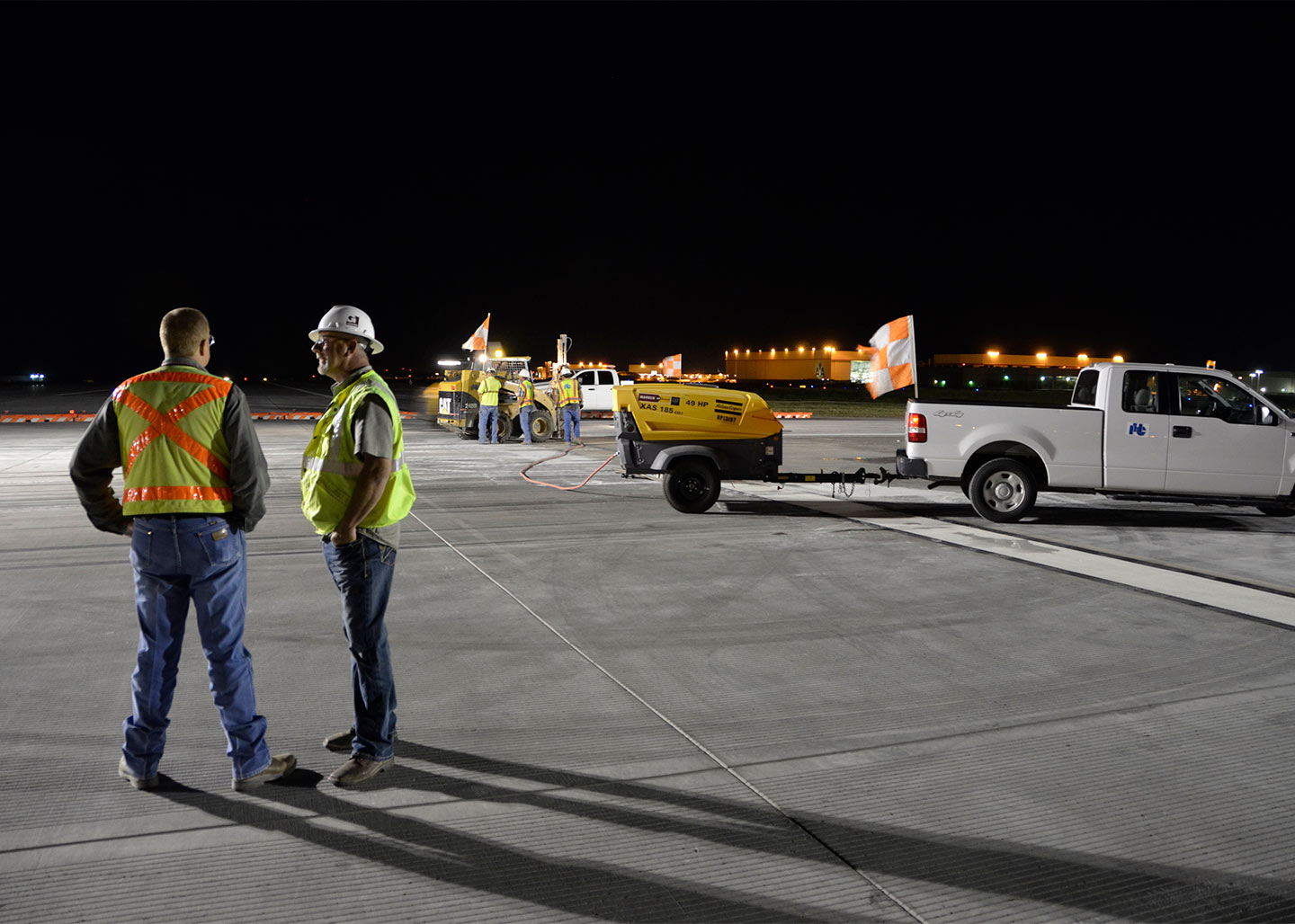
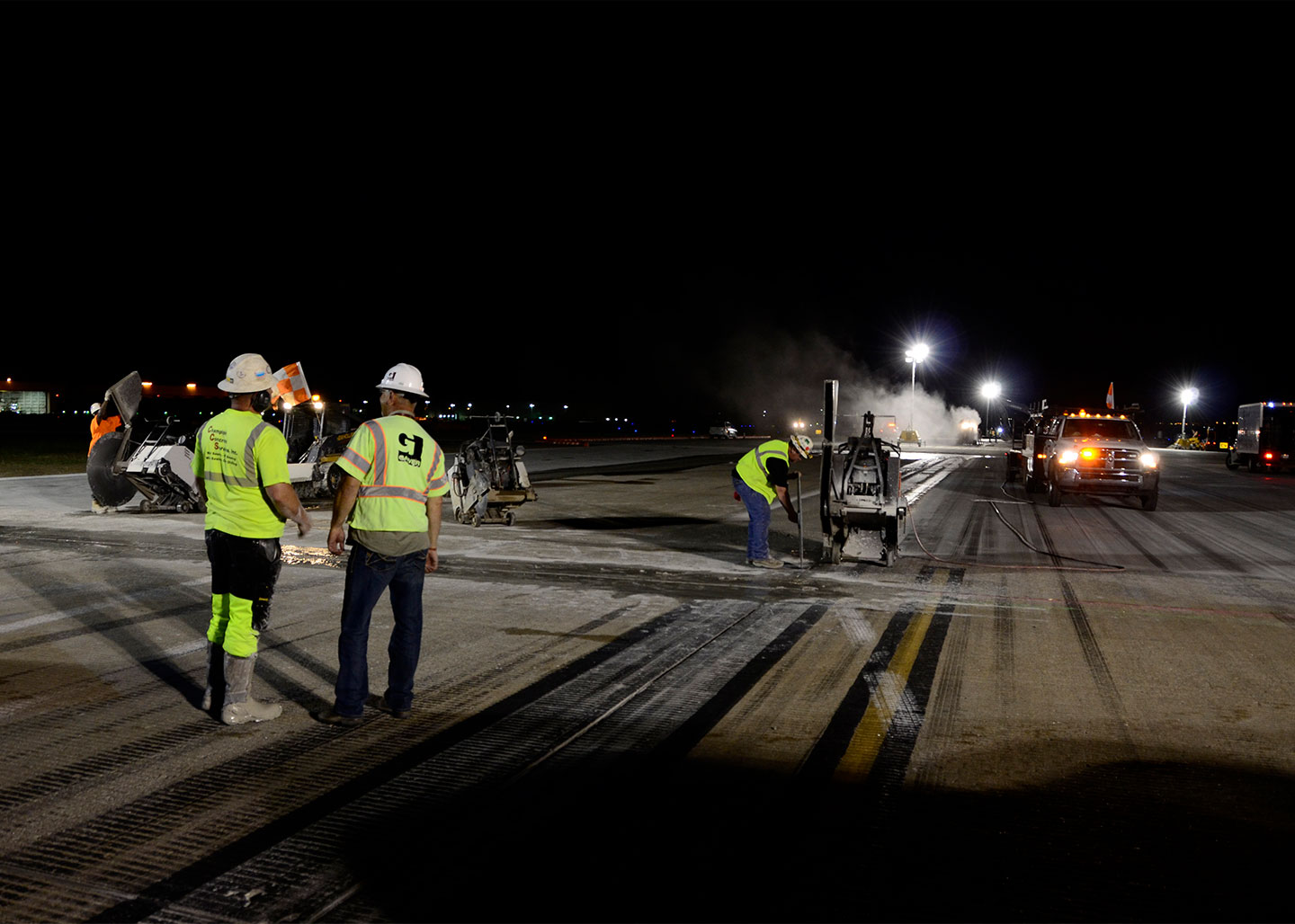
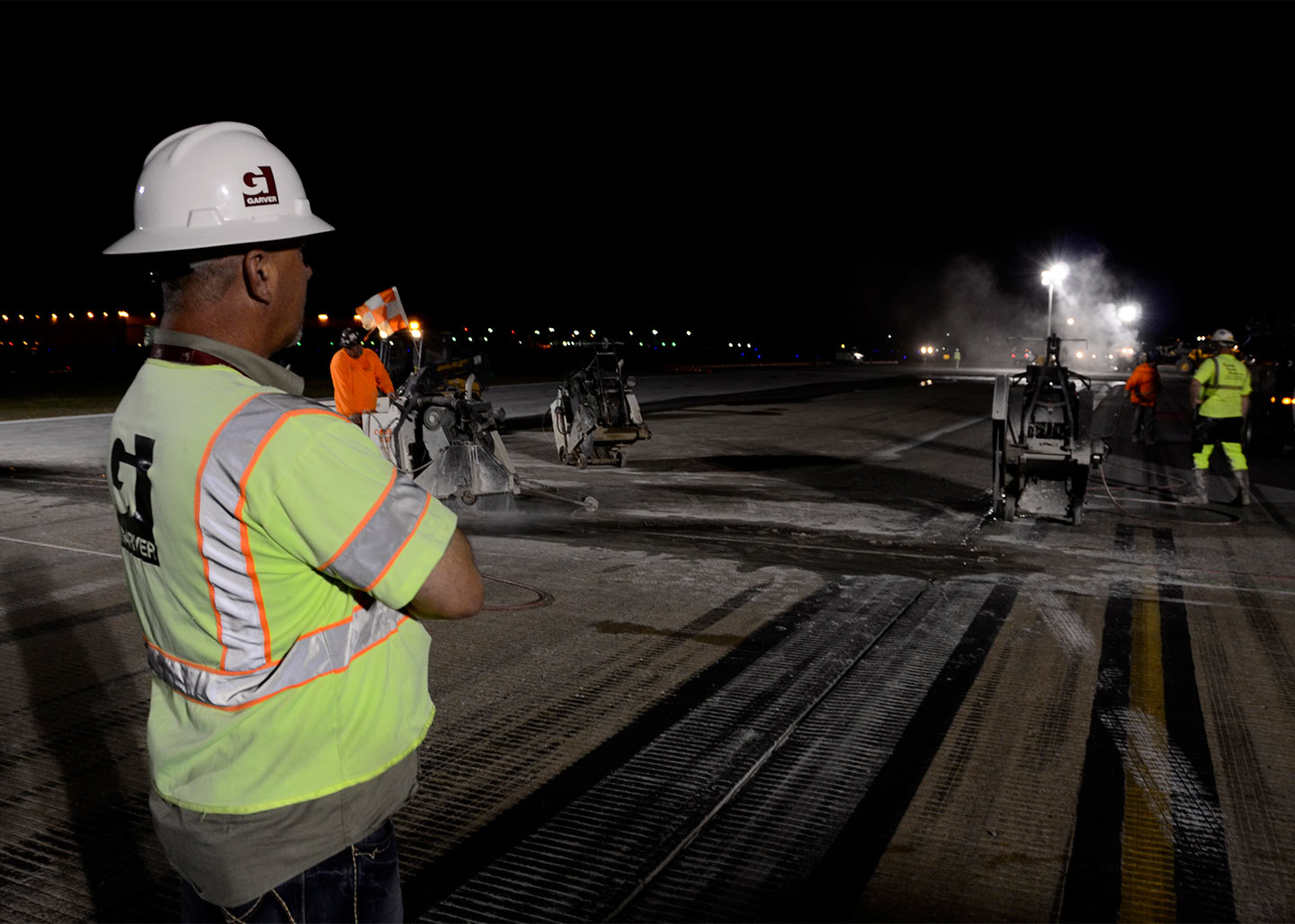
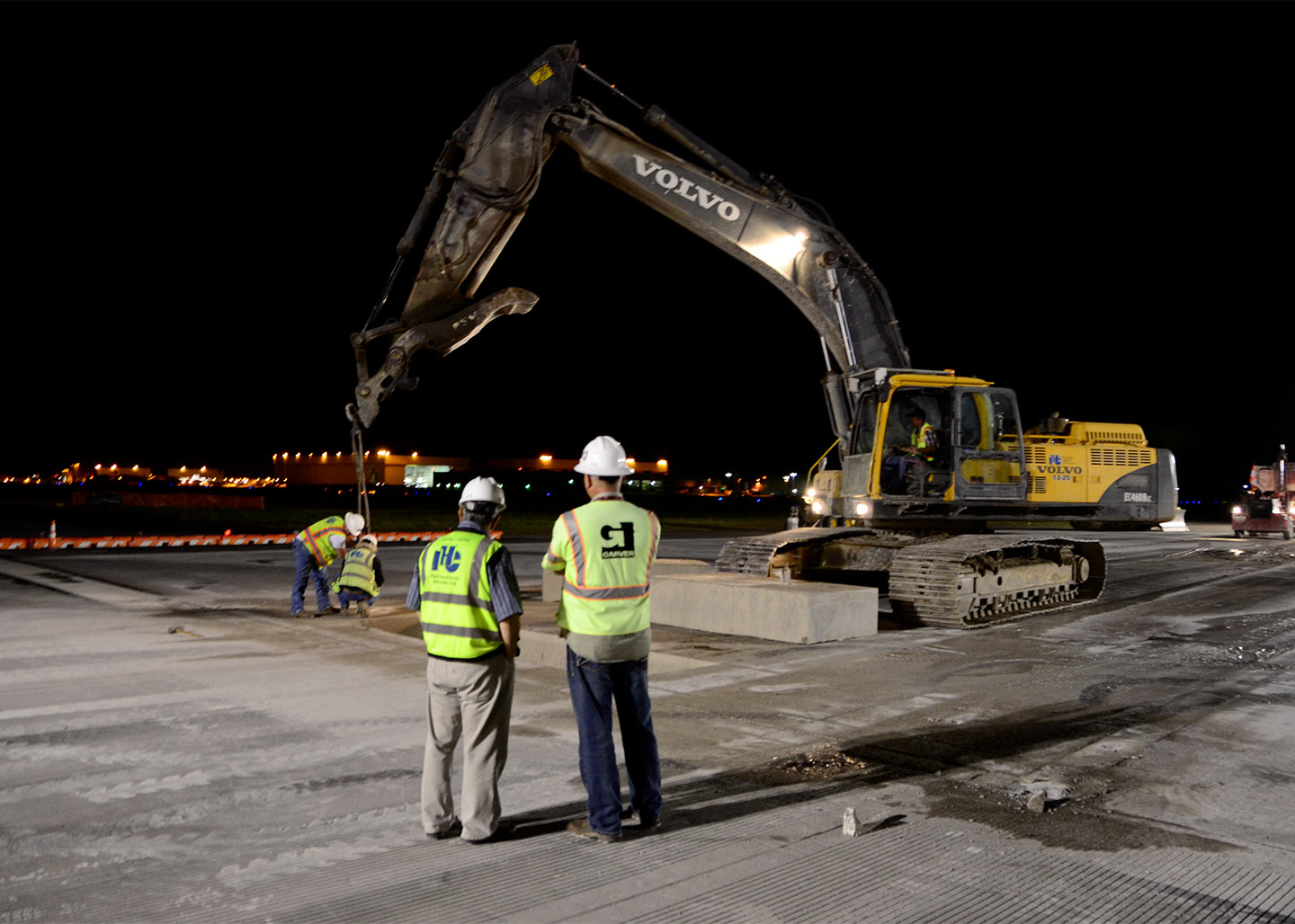
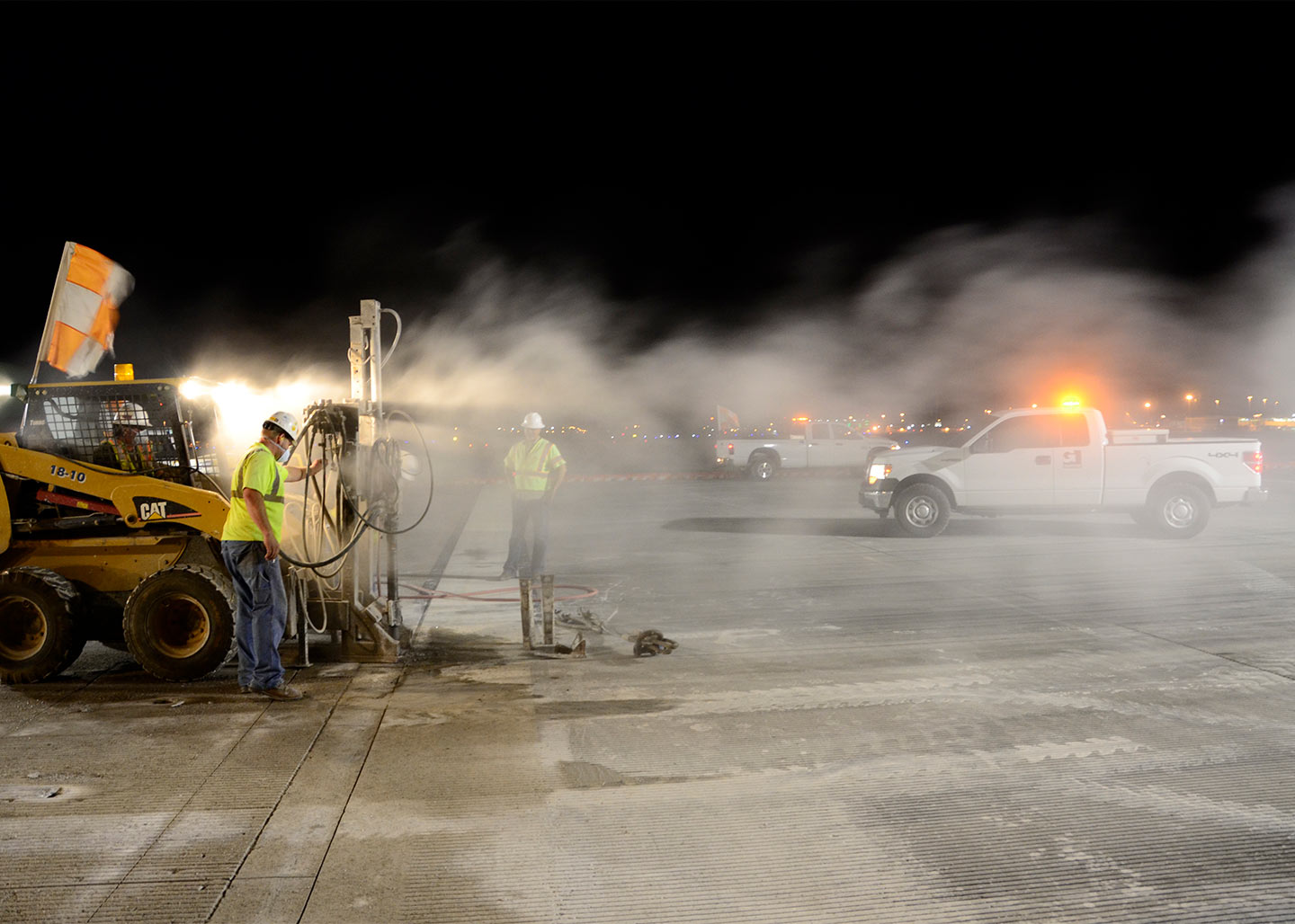
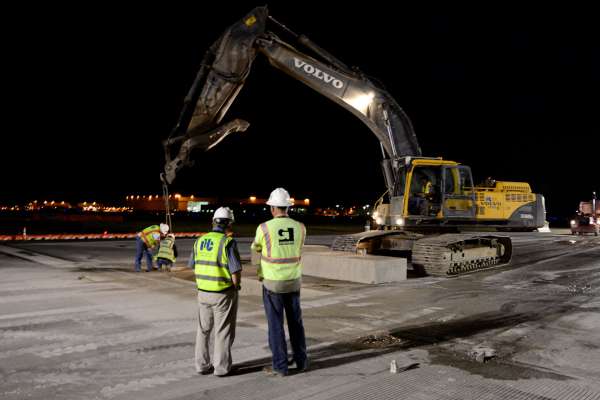
The airport began repaving sections of Runway 36R in 2011 and finished the final phase of the project—the intersection of two runways—this year. To minimize impact to airport operations, construction was limited to weekends. For the final phase, crews worked through the night for 12 weekends from 11 p.m. Friday to 2:30 p.m. Monday, tearing out the old pavement and putting in the new pavement in time for traffic to utilize the intersection by the beginning of the week.
"Garver's Construction Observation Team makes sure the contractors do everything according to the design," said Construction Observer Billy Yates. "Watching the amount of communication and coordination between all the different contractors and subcontractors out here—for this project, with this tight of a deadline—it was an impressive thing to see."
Rather than shutting down an entire runway for a lengthy period of time, Garver worked with a subcontractor and the Tulsa International Airport to shutdown pieces of the runway for short amounts of time, which helped limit operational impact. The airport repaved sections of Runway 36R by limiting construction to weekends, and the final phase consisted of 12 weekends to help upgrade an airport that services a metropolitan population area of one million people.


Share this article