Remaking a Landmark
Garver has been designing innovative river crossings from a headquarters in Little Rock or North Little Rock, Arkansas, for almost a century. So, it was most fitting for Garver to take the reins on designing the replacement of an iconic Arkansas River crossing that connects the downtowns of both cities.
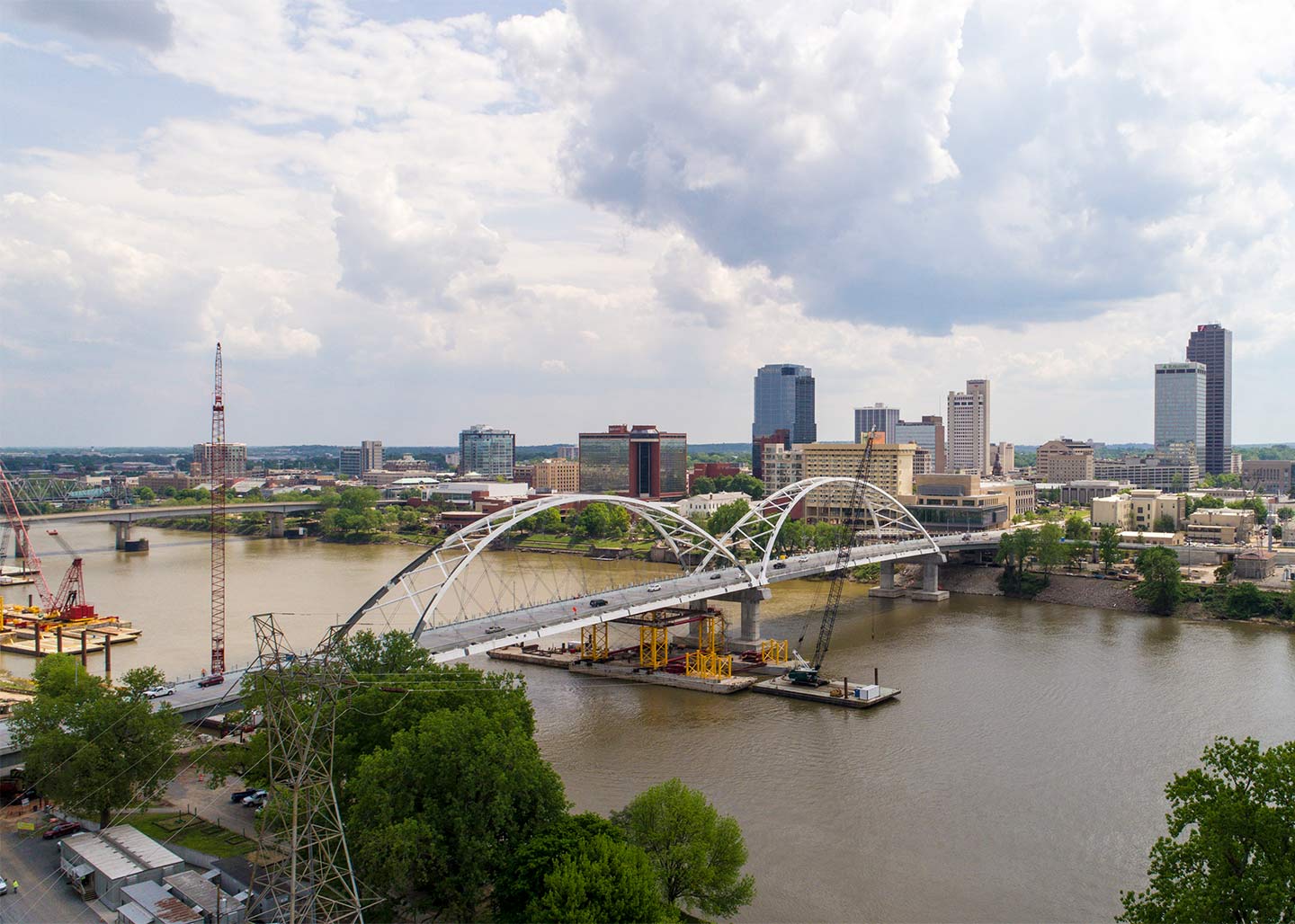
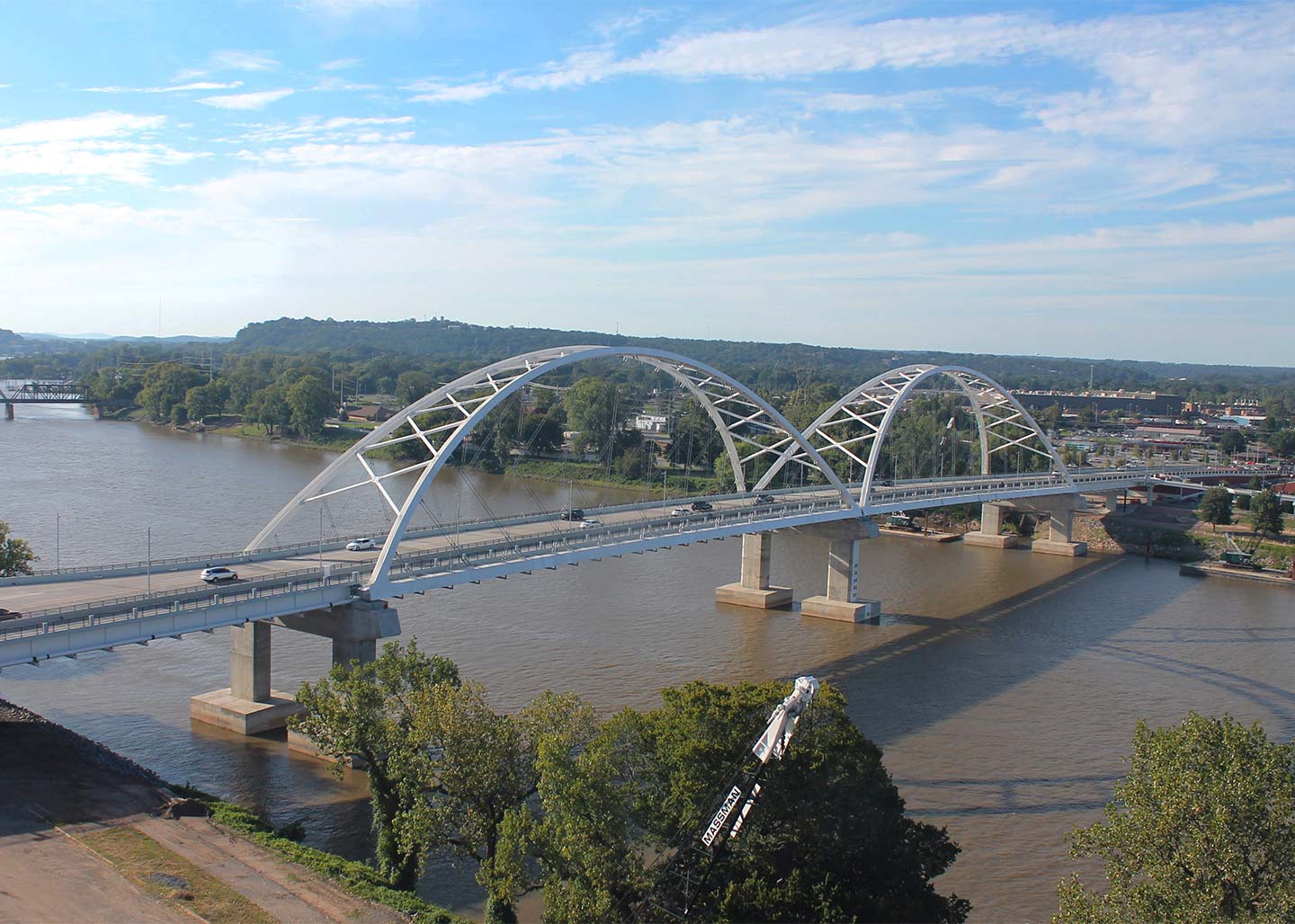
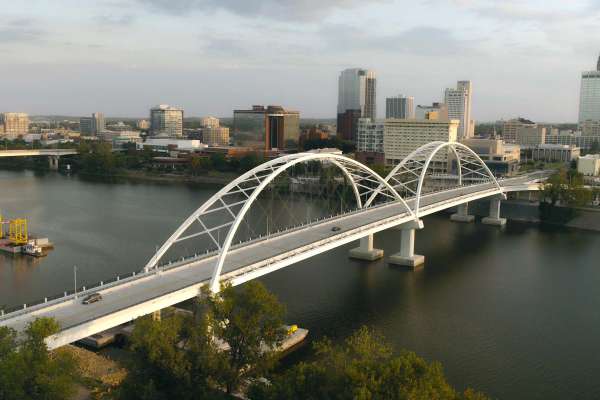
Garver provided design services for the replacement Broadway Bridge, which included approaching roadways, bridge lighting, and paths for pedestrians and cyclists. The new span, which replaced one that opened in 1923, features four traffic lanes and twin 448-foot basket-handle network tied arches that reinvents the skyline of Arkansas's capital city.
"Many of the engineers who worked on this project utilized the old bridge on a daily basis, so we knew of its importance," said Bridge Design Manager John Ruddell. "It was essential that we developed a design that not only minimized closure time, but also one in which both cities could be proud."
An offset alignment option was eliminated because of its proximity to a baseball stadium on the north side of the river and two structures — Little Rock City Hall and an auditorium undergoing renovations — on the south side. Aided by Pulaski County's $20 million contribution to the $98.2 million project, a twin-arch design allowed for the arch superstructure to be pre-assembled on barges and floated into place. Thus, the bridge opened just five months after closure, allowing 24,000 vehicles per day to navigate the state's most populated area.
For almost a century, the Broadway Bridge connected the downtowns of Little Rock and North Little Rock, Arkansas, serving daily as a popular means of passing between the two cities. When the Arkansas Department of Transportation decided in 2011 to replace the structure, issues developed because it was in the middle of a thriving metropolitan area, crowded by irreplaceable structures on both end points. In response, Garver’s design allowed for the twin-arch superstructure to be assembled on barges down-river, and then floated into place, limiting closure time to five months. Garver’s design services included approaching roadways and bridge lighting, and the four-lanes of traffic are enhanced by bicycle and pedestrian ramps.




Share this article