Imagining a Day WITH Water: A Glass-Half-Full Approach

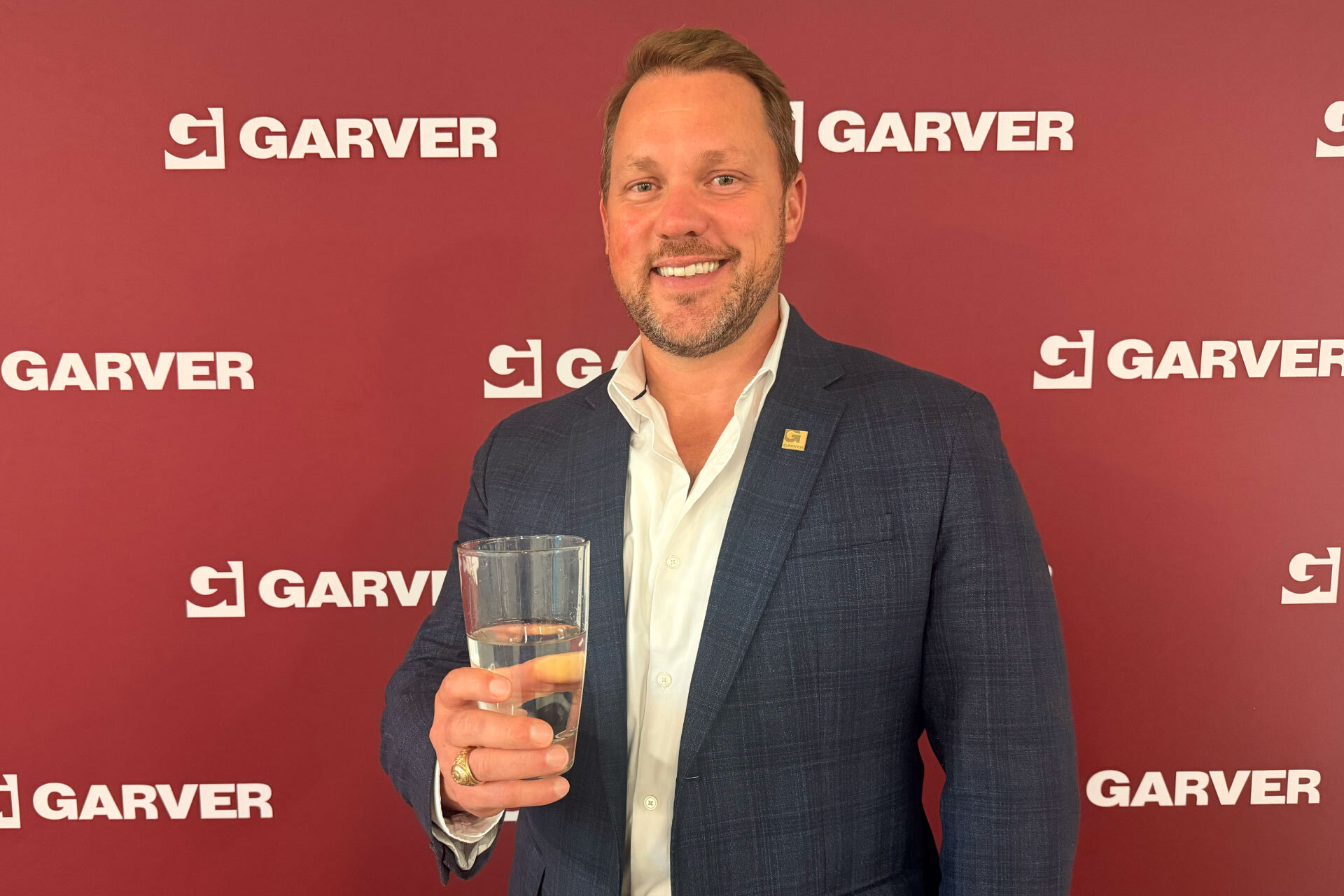
Every October, Imagine a Day Without Water prompts us to envision what our communities would look like without our most crucial resource: water. Reflecting on water and the critical role it plays in our daily lives is certainly good practice as many communities nationwide face aging infrastructure, rapidly increasing demand, water scarcity, and countless other challenges. Simply, a day without water is unimaginable!
But while our industry is navigating said challenges, there’s also a lot of room for hope and optimism in terms of our nation’s water supplies. And with that in mind, we're turning the question around by asking what water unlocks when communities can depend on it for generations: What does a day with water look like, and what will it take to ensure it remains secure and reliable for generations to come?
For me, that idea hits close to home. Water has been part of my life for as long as I can remember, both personally and professionally. I grew up in the water industry, watching my father work as an operator. Today, I live along the Guadalupe River in Texas, and some of my favorite time spent with my wife and children is kayaking together.
At Garver, we’re a “glass-half-full” kind of team. We understand the challenges facing water systems, from funding and emerging contaminants to drought and population growth. But when I look across the industry, I also see plenty of good news. Utilities are communicating better, which helps communities recognize the importance of long-term planning. New technologies are giving us more options. And leaders are increasingly willing to work across city, county, and even state lines to solve problems.
There is plenty of work ahead. There are also plenty of reasons for optimism.
Making the Case for Investment
One of the most persistent challenges for utilities is securing rate structures capable of funding the improvements their systems need. That starts with public understanding.
A utility’s first responsibility is to safely and efficiently deliver clean water while being a good steward of a limited resource. But people on the other side of the faucet do not always see everything required to make that happen. When residents understand where their water comes from, how it is treated, and what it takes to provide reliable water and wastewater service, the bill they receive each month has more context. So do conversations about future investment.
That is why public understanding has become such an important part of the work we do with clients at Garver. It is also an area where the water industry has made significant progress.
Over the past 15 years, utilities have invested heavily in value-of-water efforts. The American Water Works Association (AWWA) and the Water Environment Federation (WEF) have devoted considerable resources to strengthening public communications. Many large and complex utilities now have advanced awareness programs, and organizations such as Rogue Water Lab focus specifically on helping utilities tell the story of their water and wastewater systems.
And I think we are beginning to see an important shift as a result. Water infrastructure works best when a community sees it as a shared responsibility rather than something happening on the other side of the utility counter. It becomes our water supply, our system, and our investment in what comes next.
Getting there starts with understanding. When people can see the connection between the water coming out of their faucet, the infrastructure providing it, and the decisions required to sustain it, conversations about rates and long-term investment become community conversations. The utility brings its technical expertise, elected leaders bring their responsibility to the public, and residents bring their own expectations for the place they call home. Everyone has a stake in getting it right.
New Challenges Are Driving New Solutions
Few issues highlight this shift more than PFAS.
The discovery of widespread PFAS contamination, along with ongoing discussions about treatment rules and timelines, has put drinking water and wastewater systems in a new spotlight. Communities with seemingly abundant, high-quality supplies can suddenly face difficult questions about PFAS removal and the disposal of residuals or biosolids.
The encouraging part is how quickly the industry responded. The manufacturing and academic sectors answered the call, and technologies exist to address these challenges. Now, we have to solve the financial side because those solutions can carry significant costs.
Water supply presents another reason to be hopeful.
Across western states, including my home state of Texas, extended drought and rapid population growth have intensified an already significant supply challenge. One positive result has been a shift in how we think about managing and protecting our water supplies.
For years, water supply planning was often treated as a local issue. A town looked after its town. A county looked after its county. Today, more leaders are willing to zoom out and view water through the lens of an entire basin or region, sometimes extending across state boundaries.
That broader view has created greater collaboration and more proactive regional planning. It has also helped advance treatment technologies, including indirect and direct potable reuse, move more quickly through state regulatory processes, giving communities additional options as they plan for future supply.
Utilities Are Stepping Up
The utilities we work with deserve a lot of the credit.
Again and again, we see utilities making improvements before regulatory pressure or deadlines force their hand. They are stepping up because they believe it is the right thing to do for the people they serve.
Garver is supporting PFAS removal projects for drinking water systems in South Carolina and water supply resiliency work in Texas, including Liberty Hill’s direct potable reuse project. Liberty Hill, in particular, is an incredible example of a community coming together to take on its water challenges in a big way.
Those are just a few examples of why our glass is half full.
The challenges facing water feel like a tall mountain to climb, and many of the solutions will require persistence and significant investment. But communities have better tools than they once did.
A day without water is unimaginable. Imagining a day with water asks us to look forward instead and consider what’s required so that our communities continue to grow and flourish. For those of us in this industry, part of the job is helping people see everything that happens before the turn of a faucet. The better we tell that story, the easier it becomes to see water for what it really is: something all of us have a stake in protecting.
That gives me plenty of reason to see the glass as half full.




Share this article