Back-to-Back, Triple-Lane Roundabouts
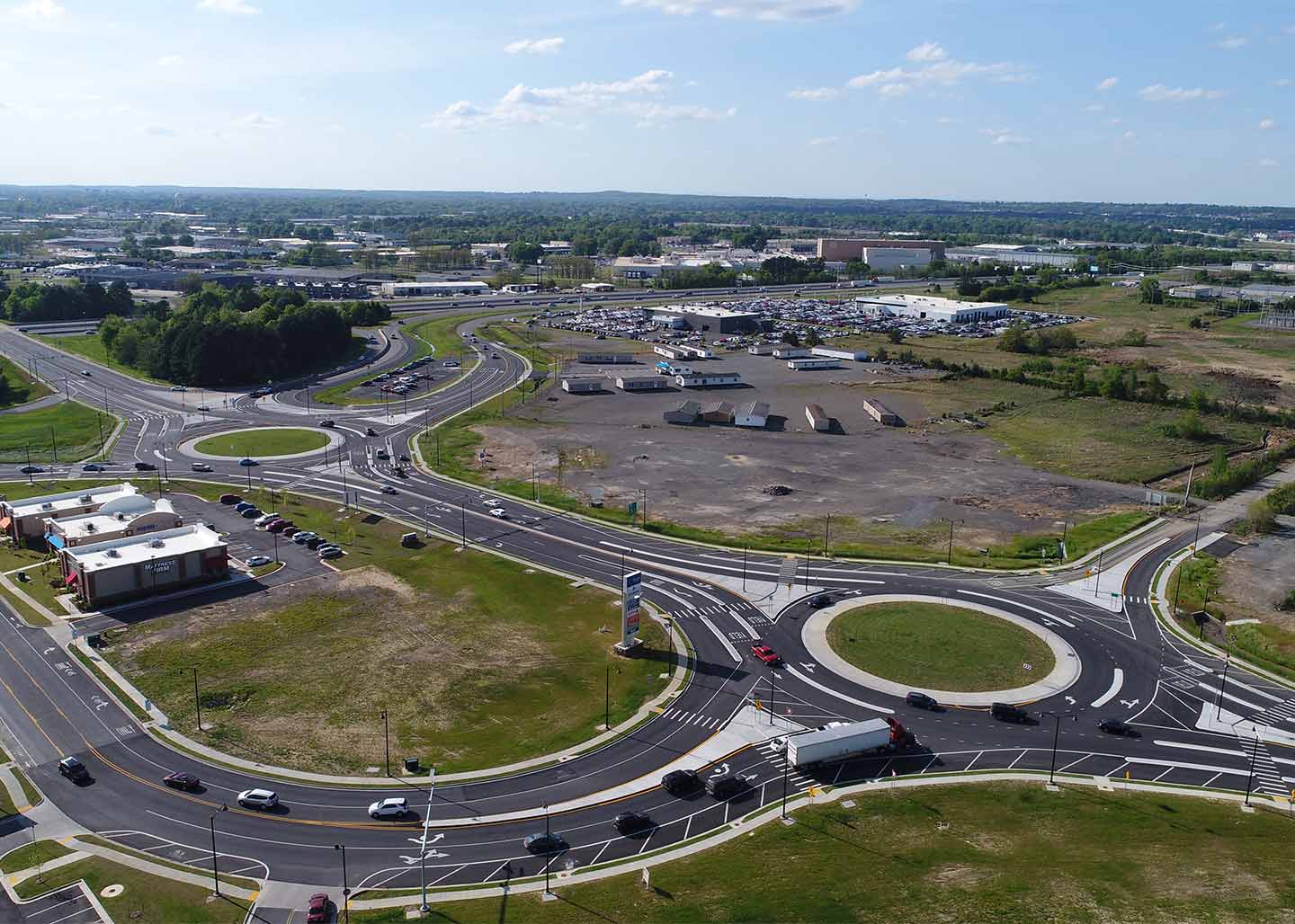
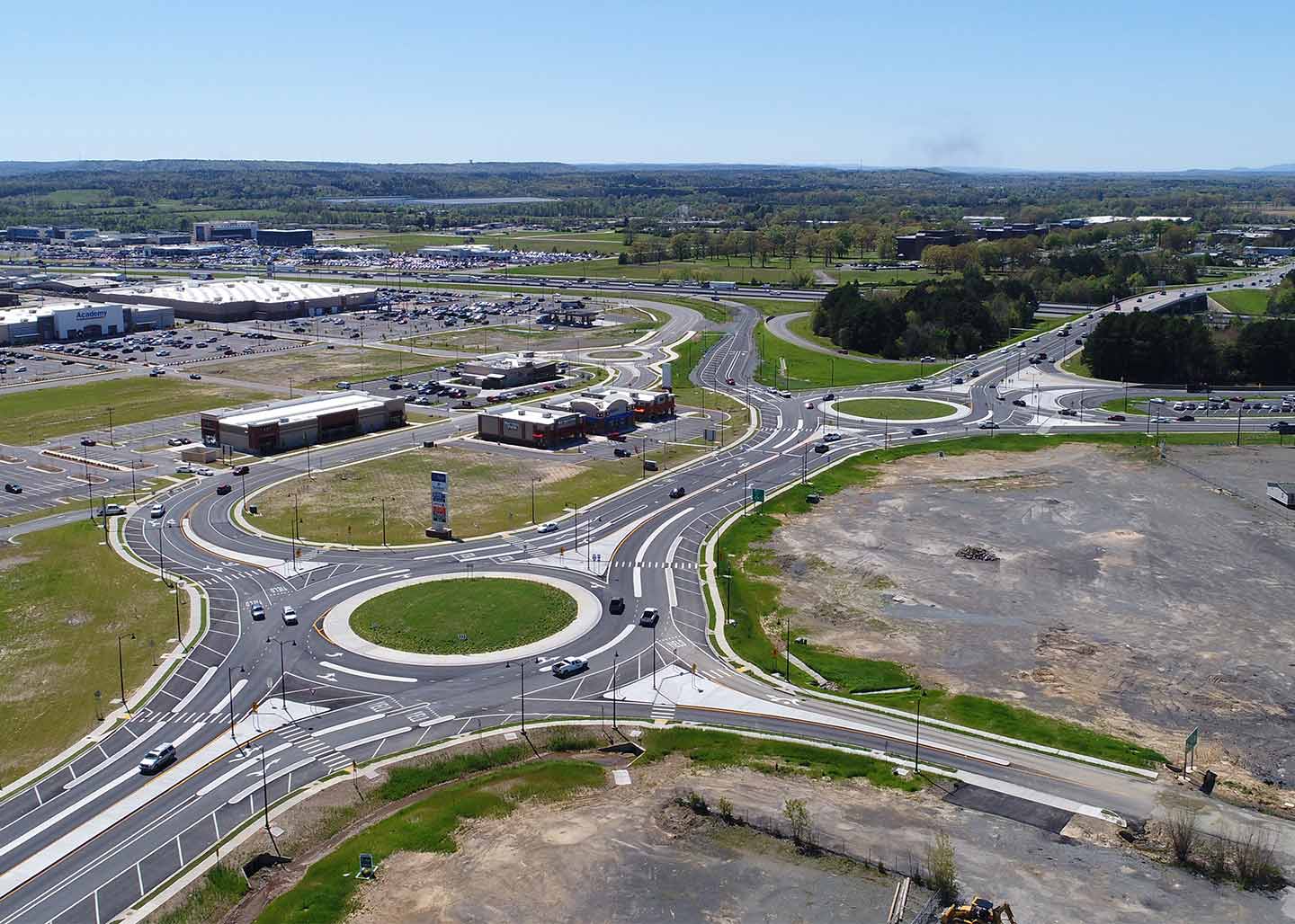
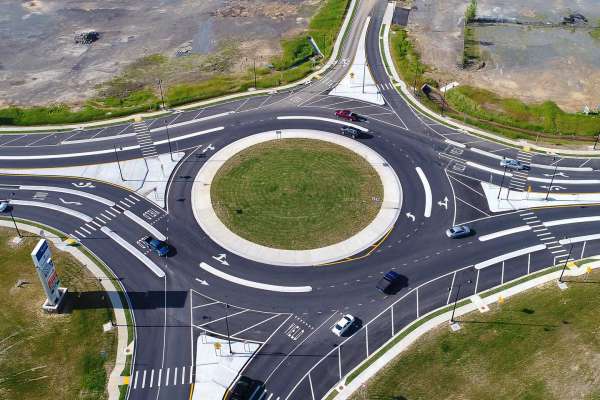
New commercial development serves as a boon to any city. But just as important is making sure drivers can easily navigate their way in and out of that space. To accommodate up to 55,000 daily motorists on Highway 286 near I-40 in Conway, Garver created what is believed to be the first back-to-back, triple-lane roundabouts in the United States, which significantly improved the operational performance and safety of the interchange.
"We're constantly looking for creative ways to make traveling the state's highways easier and safer for motorists," said John Cantabery, Roadway Team Leader for Garver. "Roundabouts significantly decrease the conflict points and vehicular speeds through the intersections, making travel to and from the city's newest developments more efficient and safe."
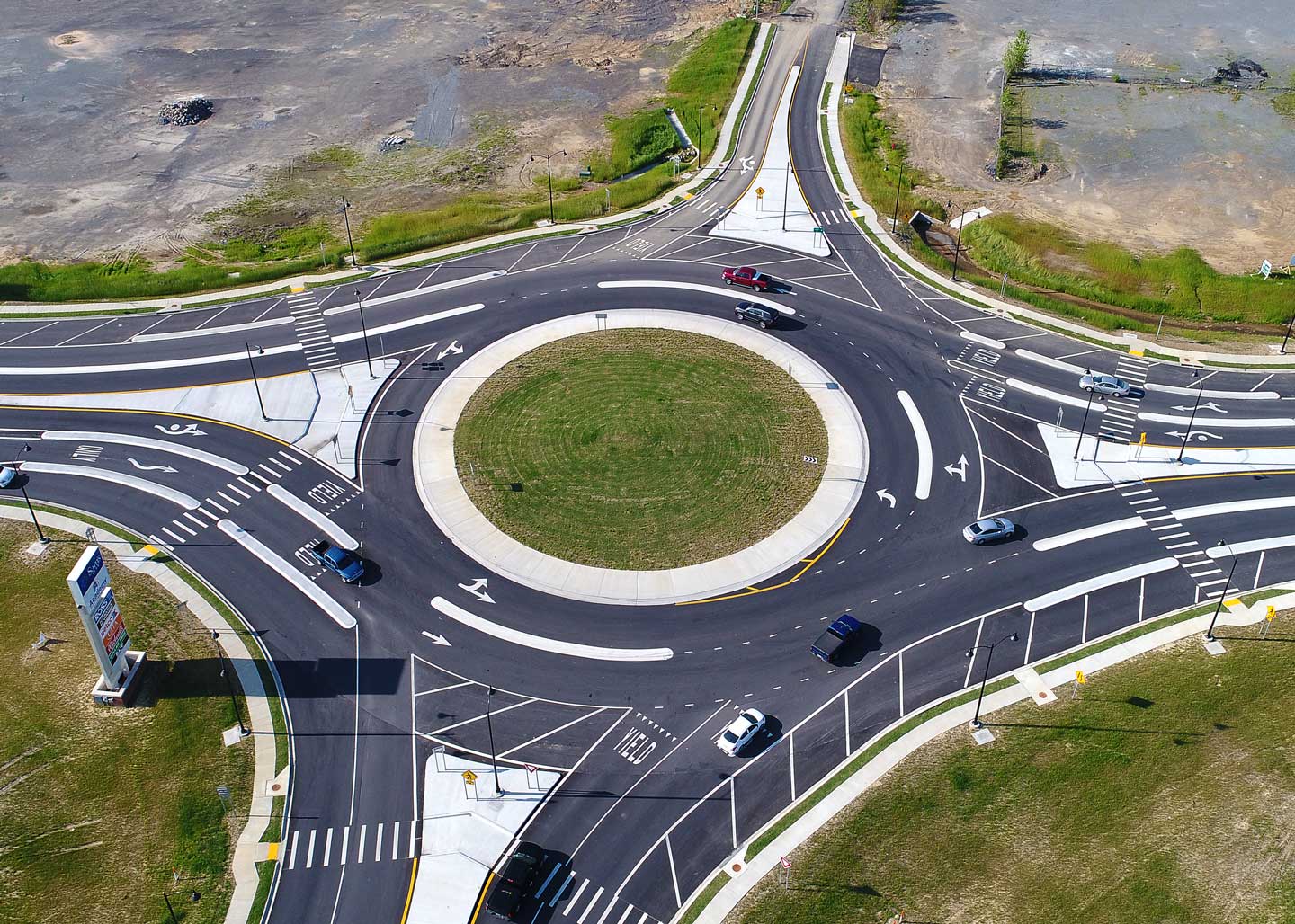
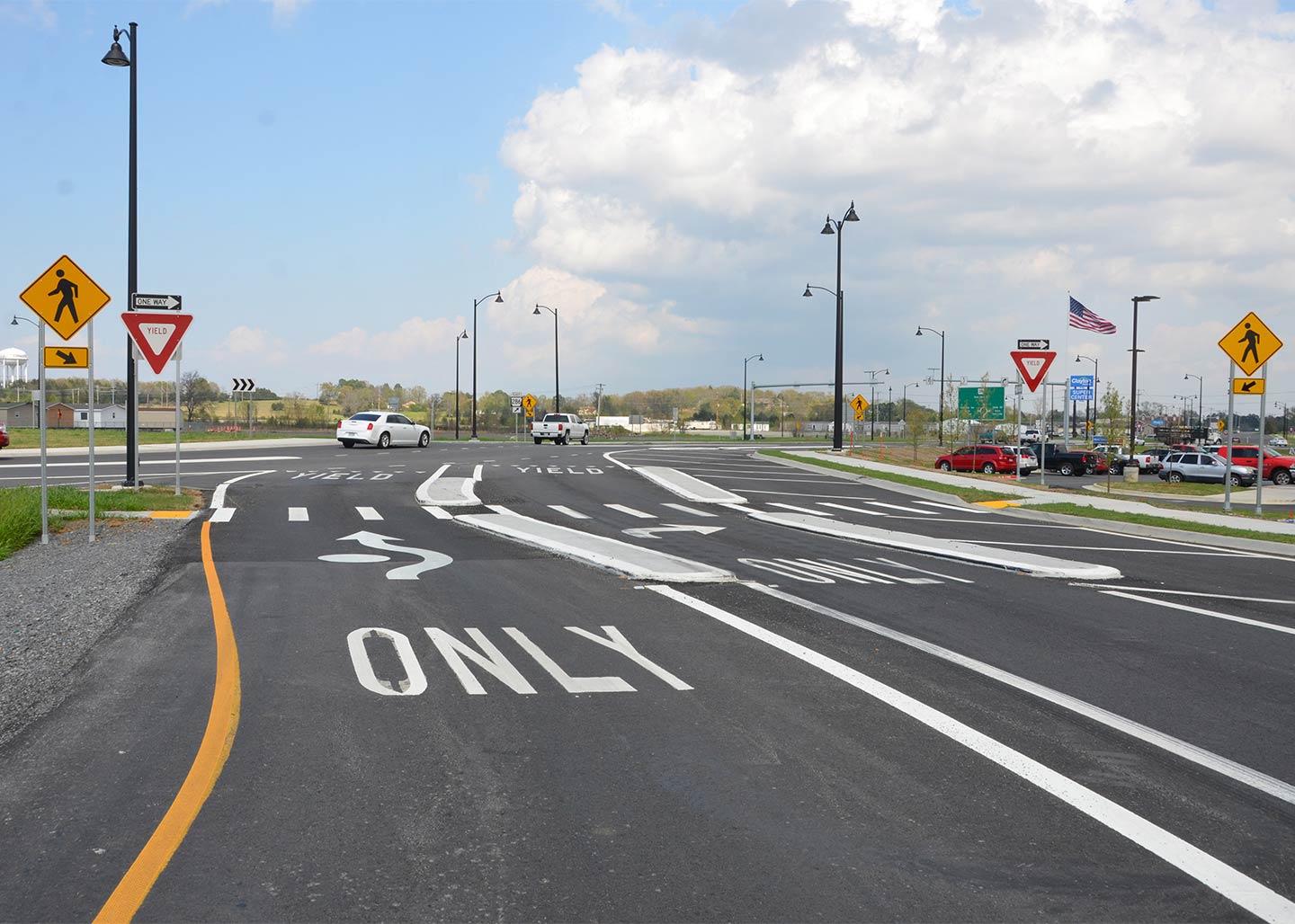
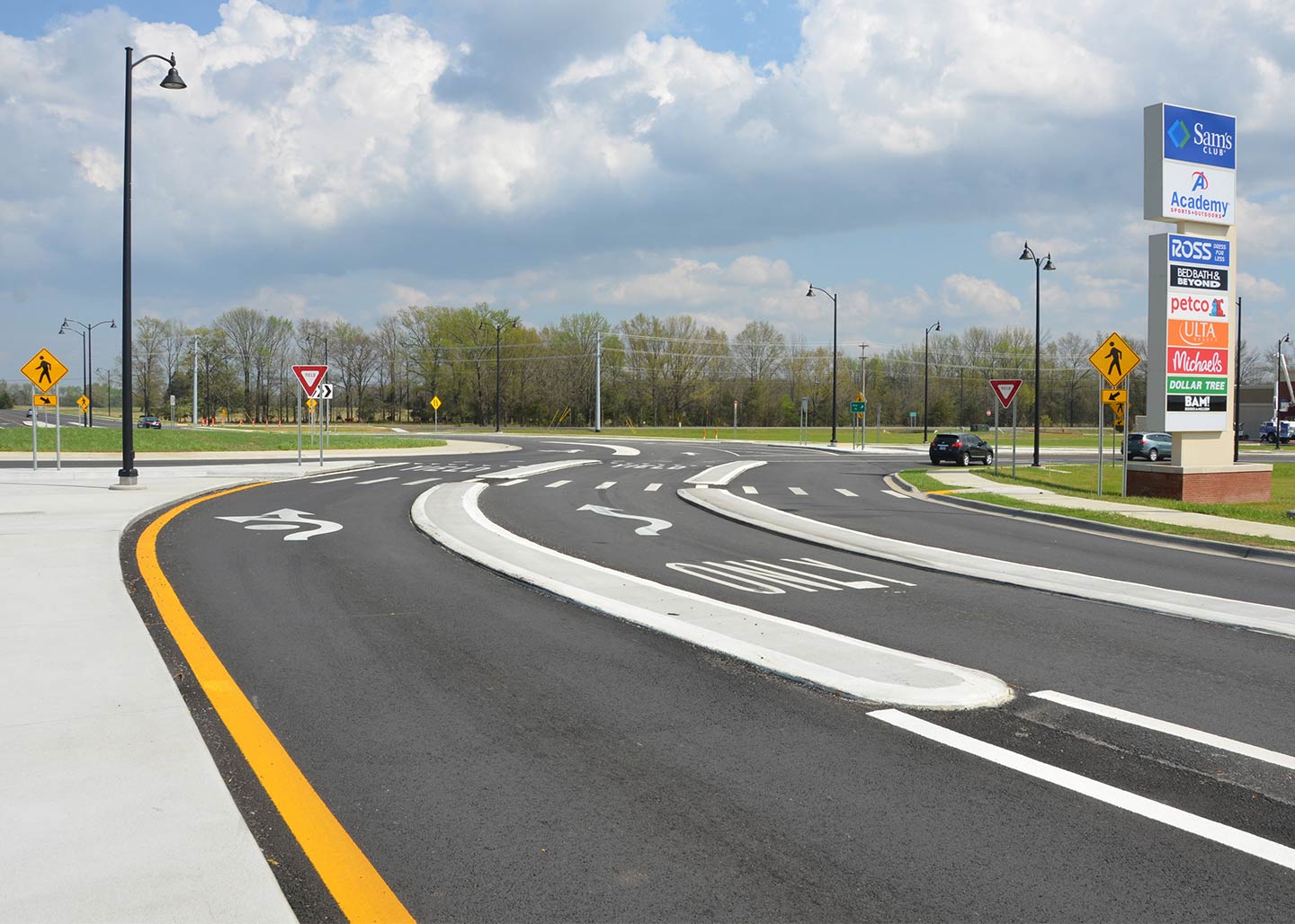
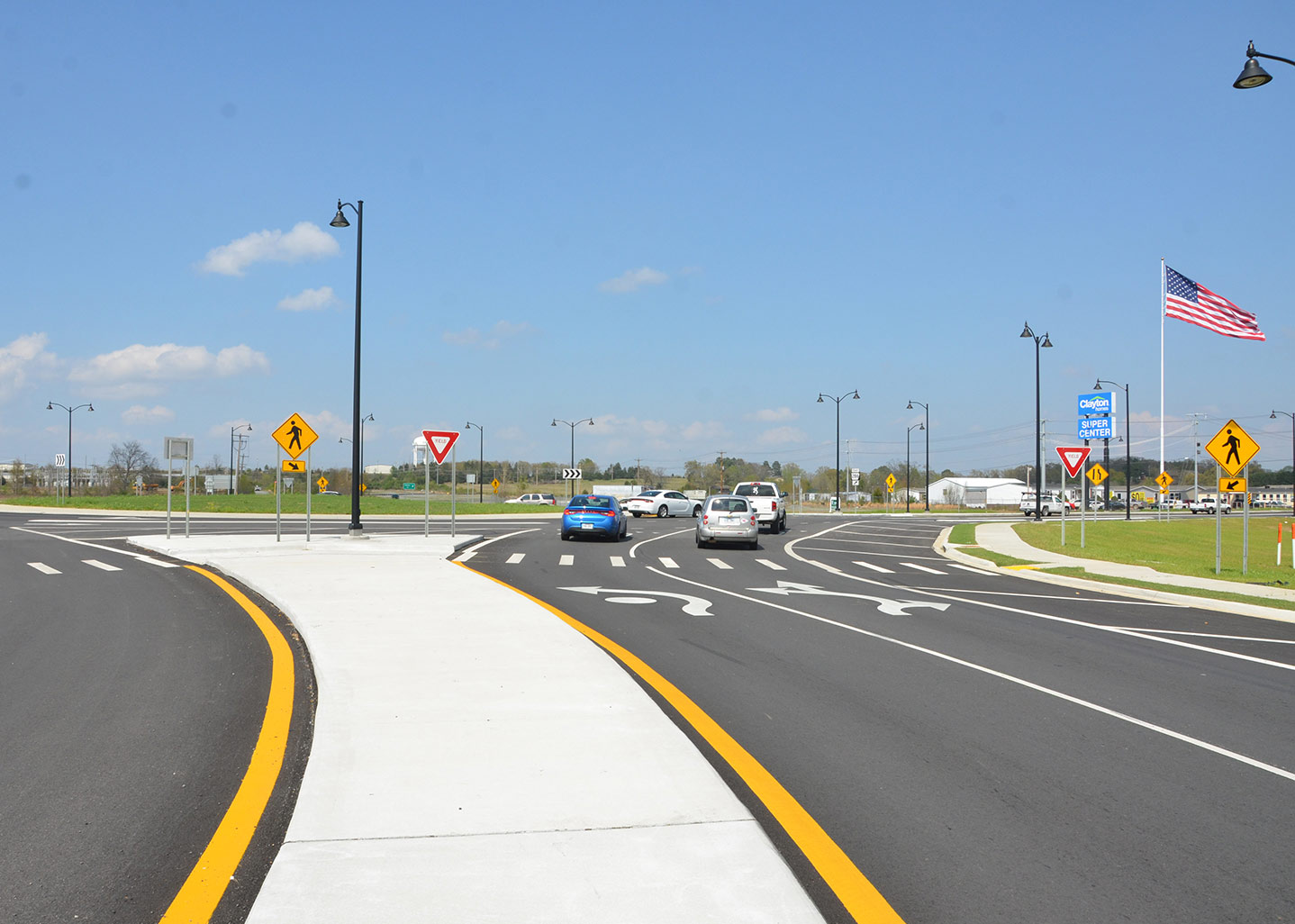
The back-to-back triple-lane roundabouts help traffic flow smoothly through a one-mile stretch of Highway 286 near the new businesses. The highway was widened, one ramp and one side road were realigned, and pedestrian accommodations were provided. The roundabouts were striped for two lanes and will be re-striped for three as growing traffic requires additional capacity. Concrete vane islands with mountable curbs to separate each lane on the approaches help control entry speeds. Garver developed flexible pavement alternatives for all roads affected, and created overhead lane assignment signs and pavement markings to help direct traffic through the intersections.
To make for easy travel to and from a city’s new commercial development area, Garver came up with a one-of-a-kind roadway project with back-to-back, triple-lane roundabouts. A one-mile stretch of Highway 286 was widened, a ramp and side road were realigned, and pedestrian accommodations were added. The two roundabouts, which are aligned for two lanes but can be adjusted for three at a later date, are the first of their kind in the United States. The roundabouts significantly decrease the conflict points of the intersection and the speed of motorists, therefore making the intersections more efficient and safe.


Share this article