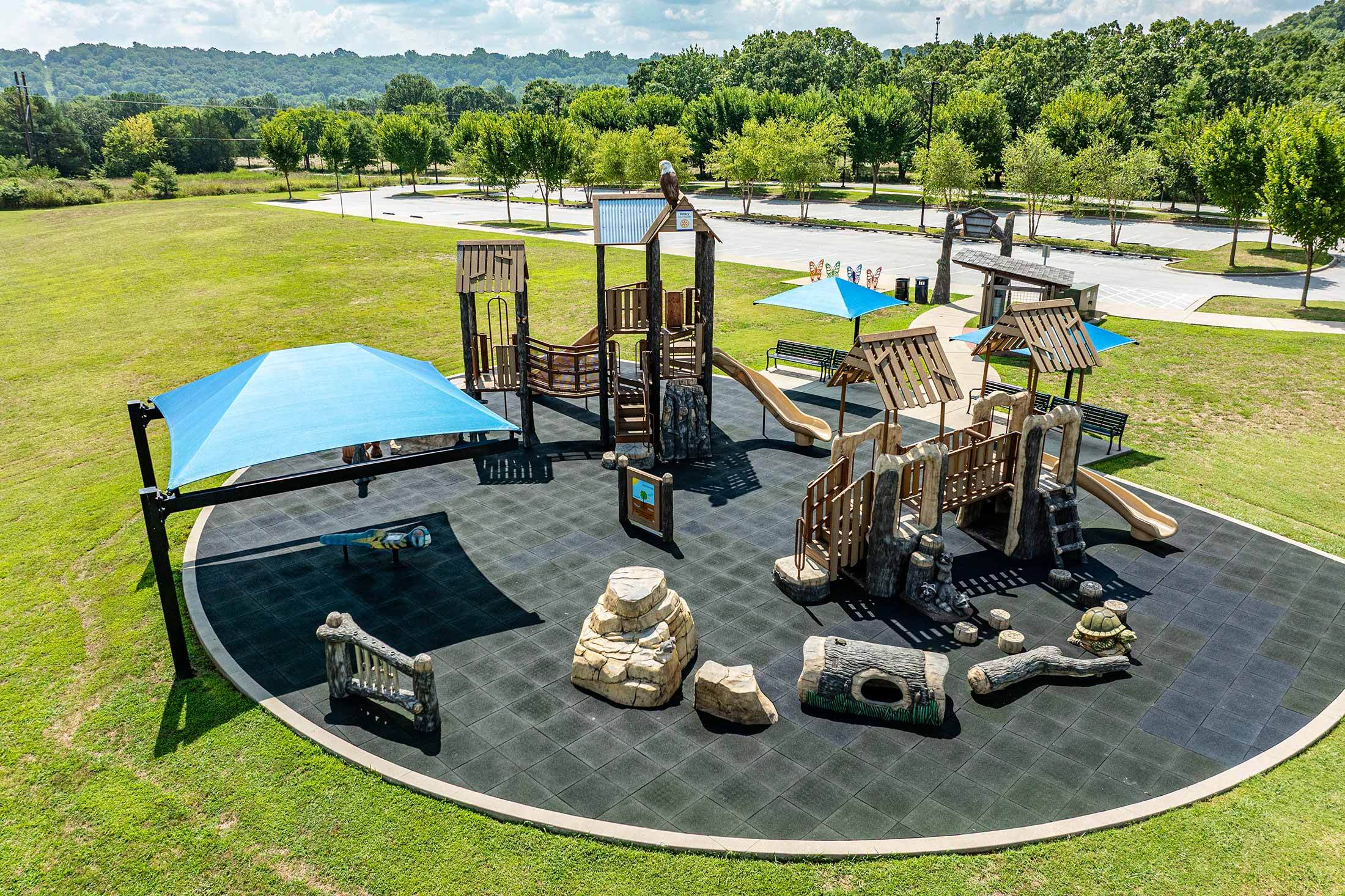
The City of Fayetteville, Arkansas was in need of a space to not only host various youth athletic events, but also provide residents and visitors with outlets for cycling, hiking, and playgrounds. Without it, local youth leagues couldn’t grow, and residents were left searching for recreation opportunities elsewhere.
The City had a location perfect for this purpose - Kessler Mountain Regional Park. Originally 200 acres of cattle ponds and pasture, the area had not only been remade into a beautiful space for residents and visitors, but had also grown to 620 acres, making it Fayetteville’s second largest park.
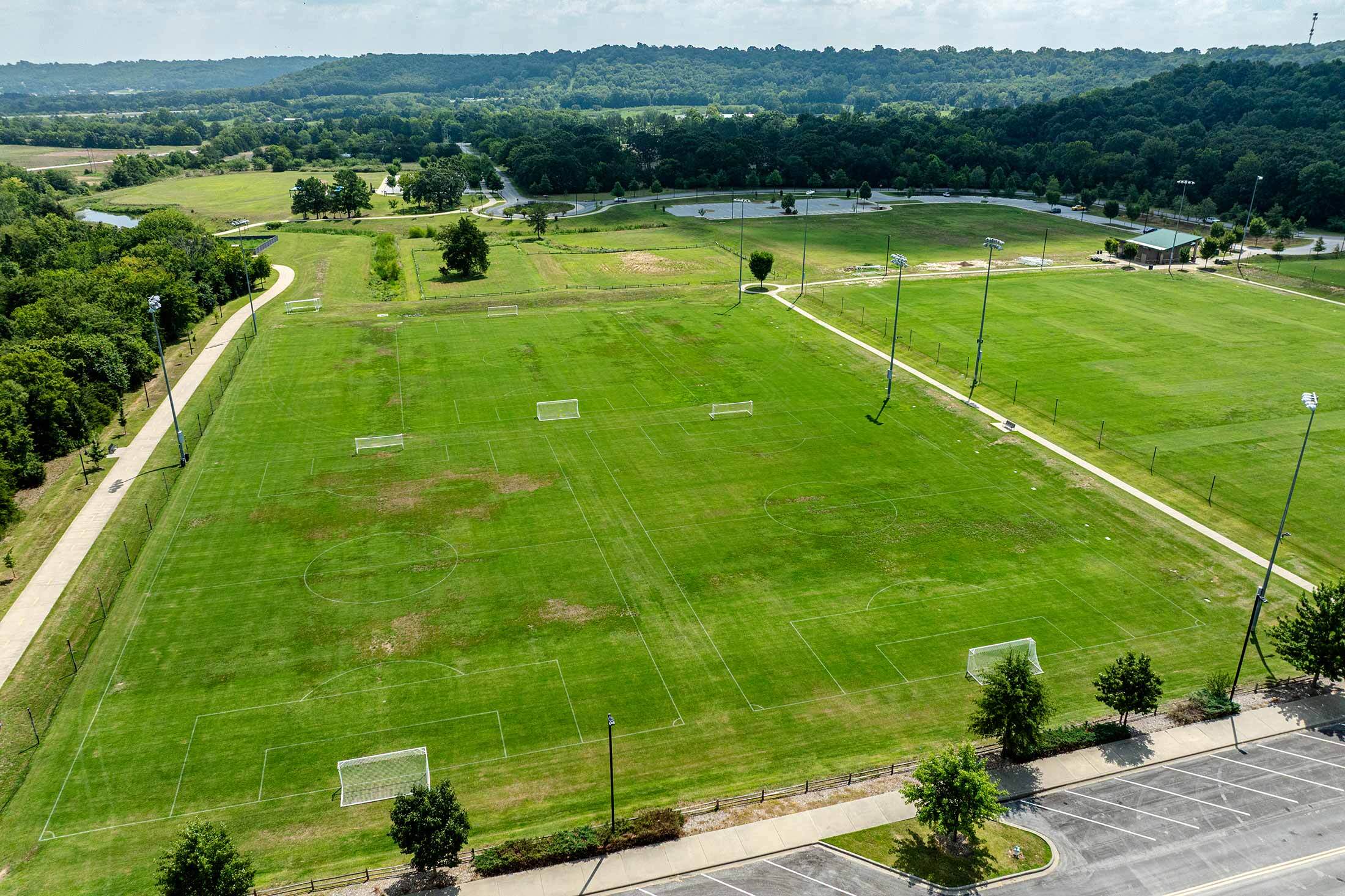
Garver acted as subconsultant for phase one of the park’s master plan, responsible for drainage, roadway, water and sewer, sewer treatment plant, and the structural design of the buildings. At the end of that phase, Kessler was outfitted with four lighted baseball fields, alongside six soccer fields, two restroom and concessions buildings, and 400 parking spaces.
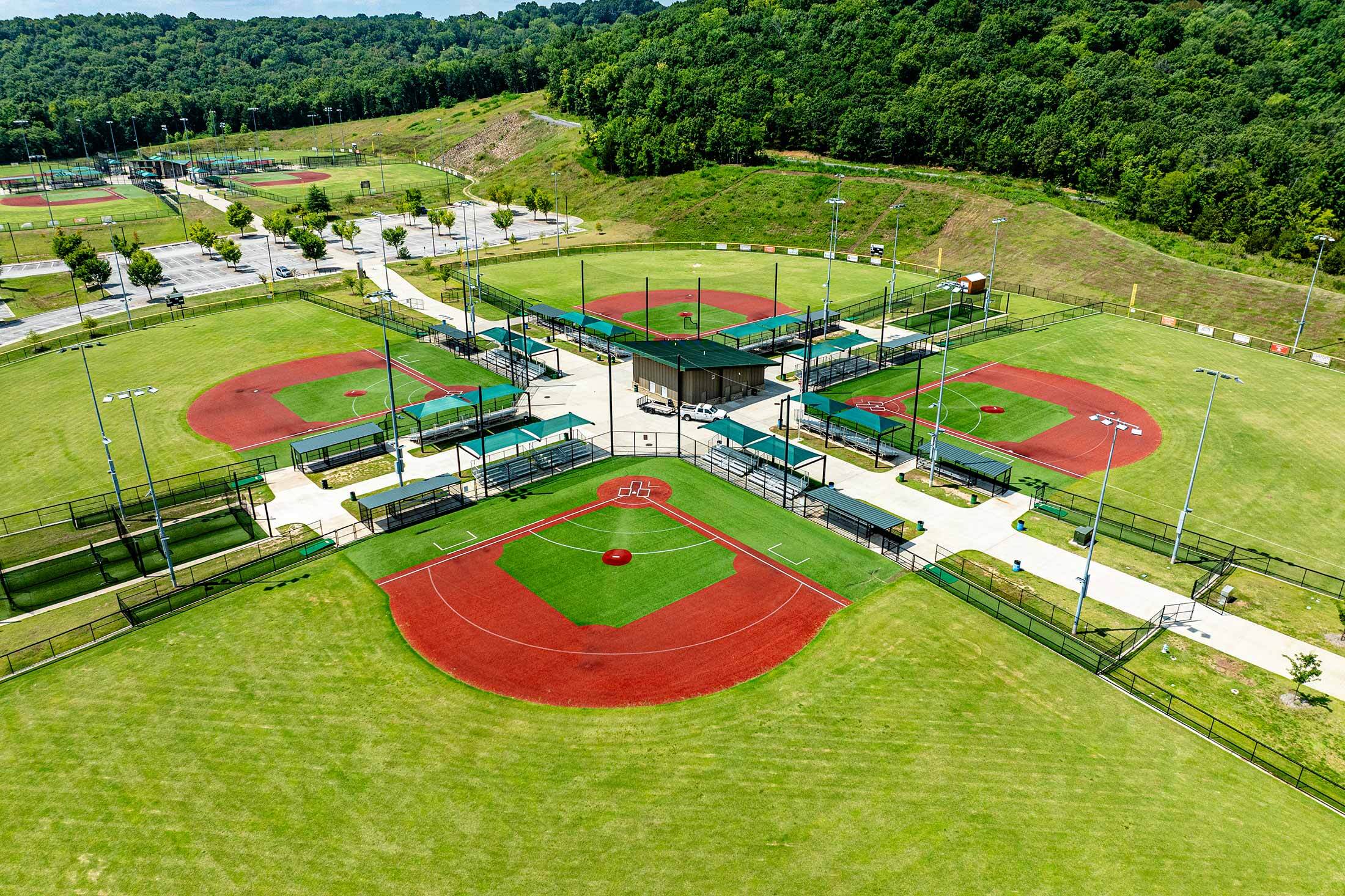
Phase two brought an additional four lighted baseball fields, another restroom and concessions building, a new 211-space parking lot, batting cages, and bleachers. And Garver, this time as the prime designer, would deliver everything needed, plus the next-level enhancements families and traveling teams expect.
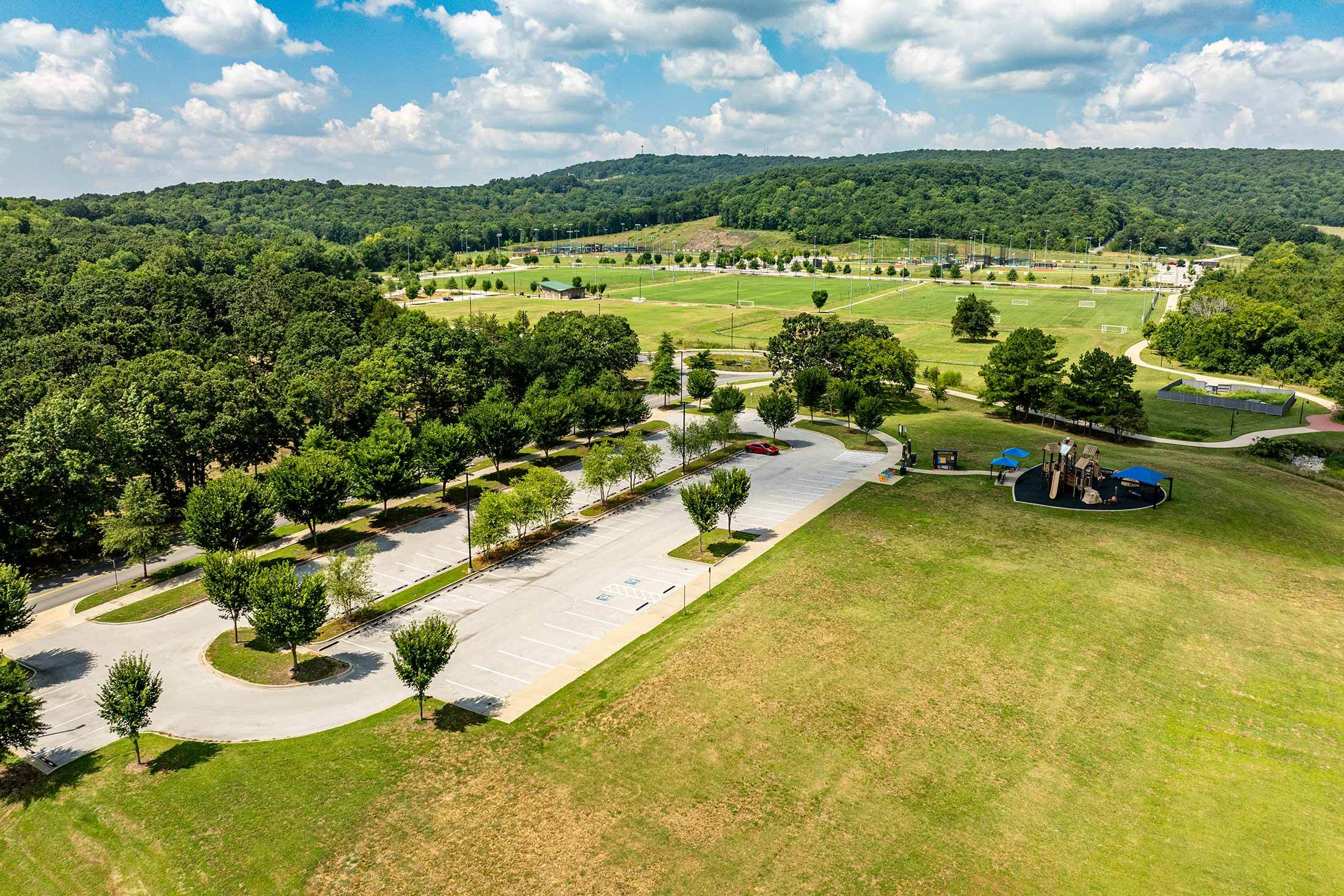
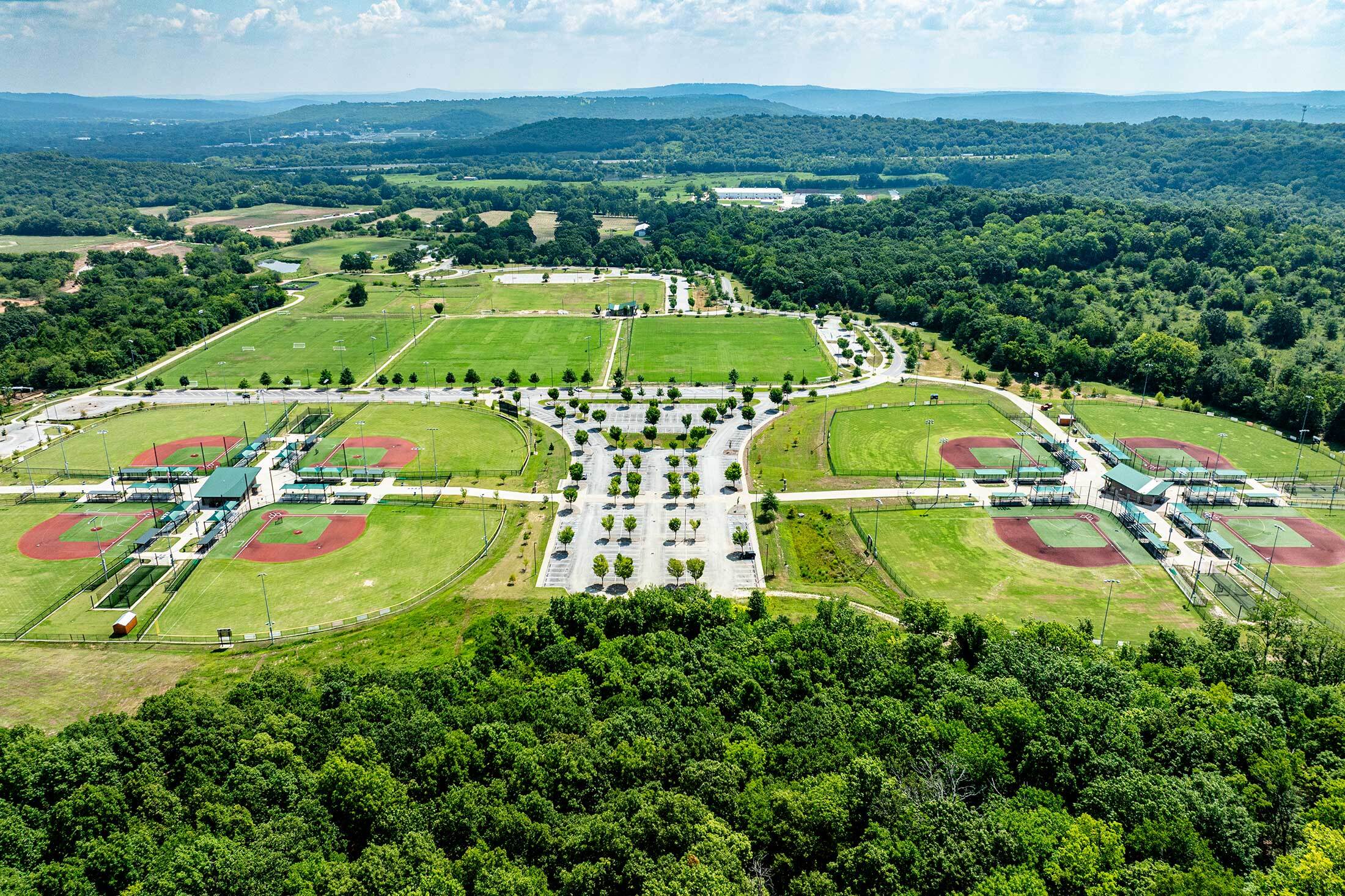
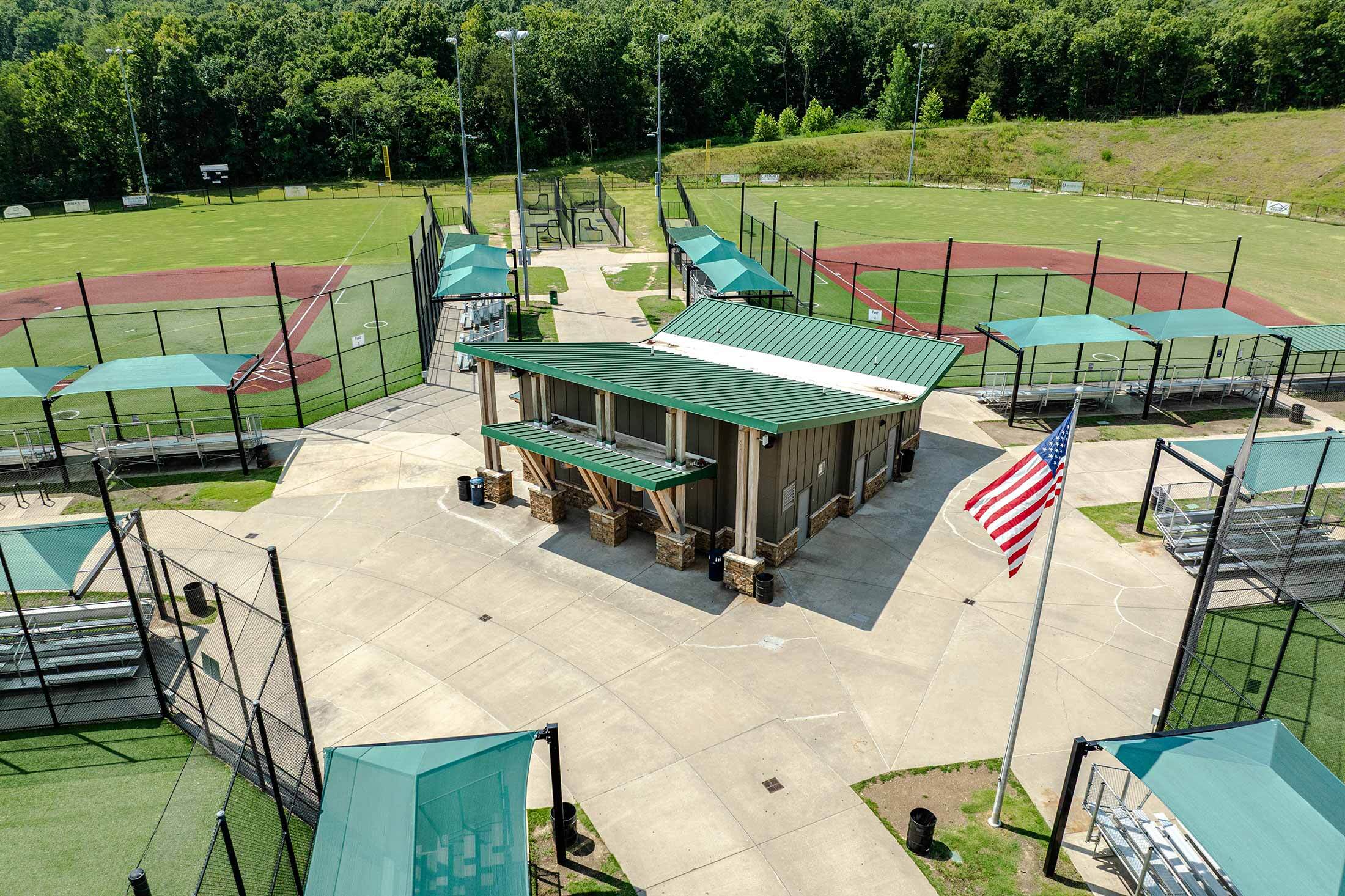
Garver’s Buildings, Federal, Transportation, Field Services, Water, and Survey teams provided all the resources needed for Garver to complete the project in house, which yielded a great result for the City.
Two intermittent streams flow through Kessler Mountain, and Garver addressed drainage with the building of seven stormwater ponds. They handled environmental mitigation as well, planting Water Tupelo, Baldcypress, Black Gum, and other trees and flowering bushes that are compatible with the environment and are low maintenance.
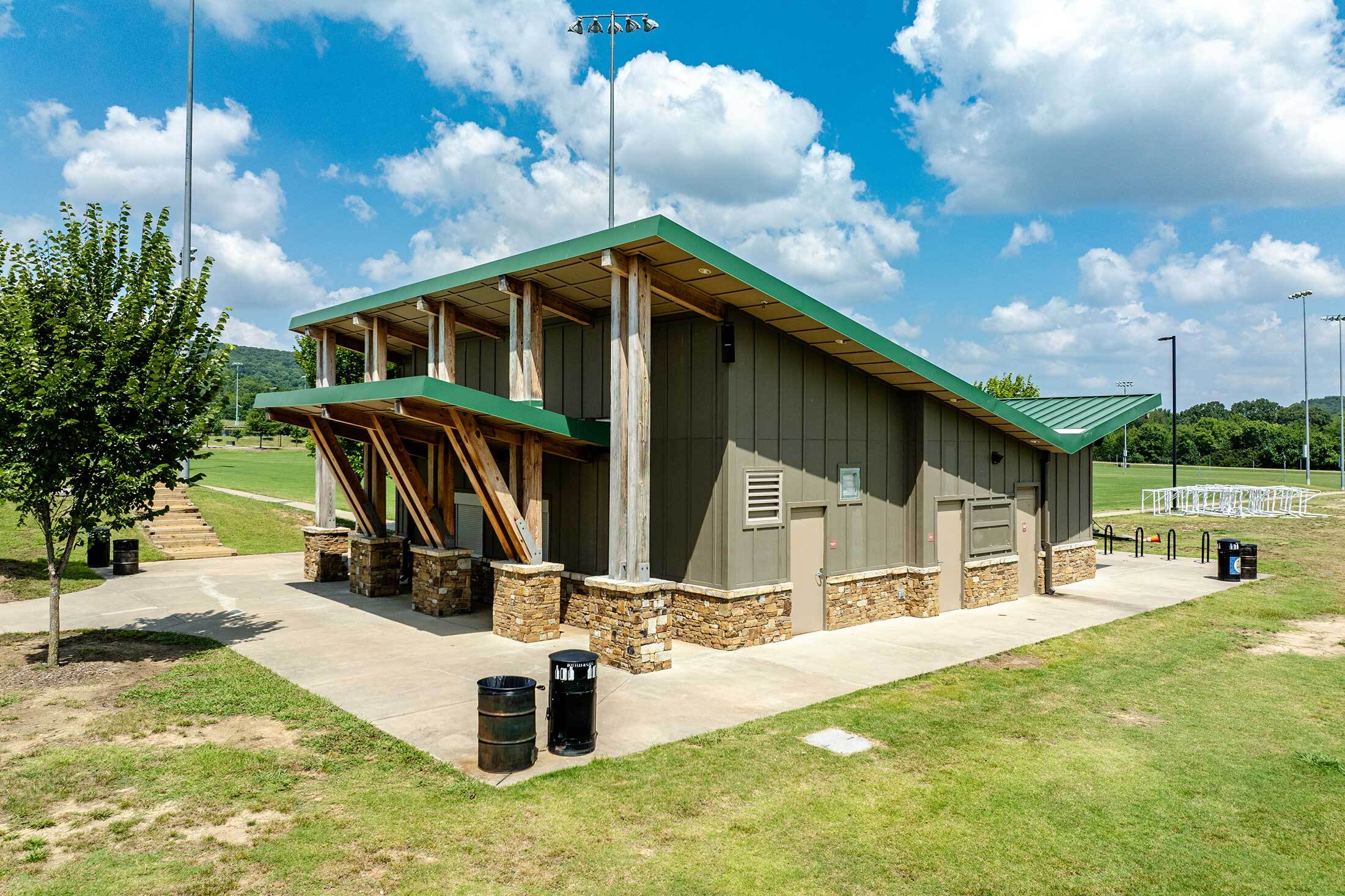
Garver’s structural engineers and architects fit the concession and restroom building to the landscape of the park, using exposed wood in the beams and a stone finish to make the building reflect its surroundings. The restroom was designed to withstand heavy use and to resist misuse.
Garver’s MEP experts made certain that the concession stands got commercial kitchen capabilities. LED sports lights were installed to provide high visibility and save the City money.
And then there were the baseball fields, batting cages, stands, dugouts, and stone markers for the stadium complex. Garver Landscape Architect Brent Thomas, PLA, CPSI, designed features that provide comfort, ease of maintenance, and playability.
Bleachers are shielded from the sun by shade structures. Covered dugouts protect players from sun and inclement weather and contain a moveable bench. Infields are covered in artificial turf, which is marked for different age groups, allowing for the easy adjustment of bases and so forth, depending on who’s playing. And that turf is on top of a drainage system that whisks rainwater away, keeping the field ready for play (the City retrofitted the four fields built in phase one with this improved system). Batter’s boxes, a notoriously worn part of the field, are connected to the turf with Velcro, and can be pulled up and replaced when they begin to deteriorate.
Stone markers, bearing the City seal and the different names of each part of the complex, not only help to direct people to the correct field, but also convey the City’s brand. The stone on the markers matches that on the restroom and concession buildings, and blends with the surrounding landscape.





Share this article